Understanding the Role of Lye in Natural Soap
Natural cold process soap explained — from a small British soap maker
If you’ve ever looked at a handmade soap label and spotted lye, water, or a trace of sugar listed alongside the main ingredient, you’re not alone in wondering why. It’s one of the most common questions in natural soap making — and it deserves a straight answer.
Soap cannot Exist Without Lye and Water
Every single bar of real soap — no matter the brand or recipe — is made using lye (sodium hydroxide) and water. Without them, oil will simply remain oil. You can mix it and pour it into a mould, but it will never become soap. It will just be a pot of grease.
The good news is that by the time a cold process soap has fully cured, the lye and water have been completely consumed in the saponification reaction. A properly made bar contains no lye whatsoever — just soap and skin-loving glycerin.
There is no such thing as lye-free soap. If a product claims otherwise, it either isn’t real soap, or the lye simply hasn’t been listed on the label.
Why Does My Soap Contain Sugar?
A small amount of sugar is sometimes added to cold process soap — often through milk or a simple sugar solution — to boost lather. It’s a processing aid, not a defining ingredient. Think of it like salt in bread making: a small supporting role, nothing more. Like a 1 teaspoon per kilo of fat
What Is Pure Tallow Soap?
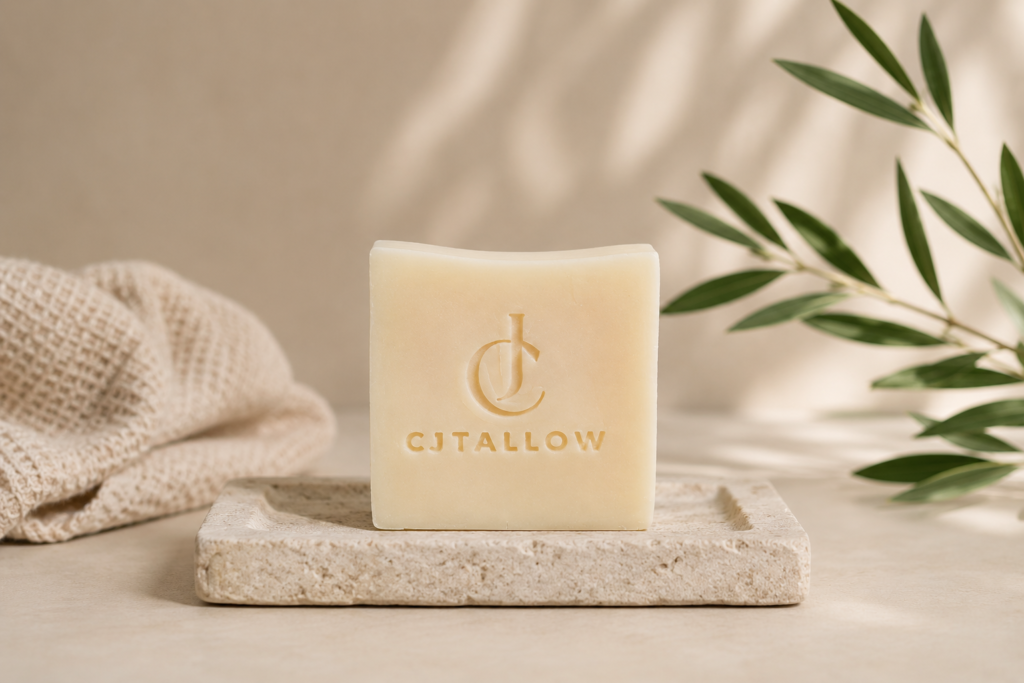
Tallow — rendered beef fat — has been used in soap making for centuries. When we describe our soap as pure tallow, we mean tallow is the one and only fat in the recipe. No coconut oil, no olive oil, no blends. Just 100% tallow.
On the ingredients label, you will see tallow listed by its official INCI (International Nomenclature of Cosmetic Ingredients) name: Sodium Tallowate. This is simply the name given to tallow once it has been saponified — that is, once it has reacted with lye and water and become soap. Sodium Tallowate is the soap. It is the pure tallow, transformed.
Pure tallow soap is renowned for:
- A rich, creamy, stable lather
- Being gentle and nourishing on sensitive skin
- A fatty acid profile closely compatible with human skin
- A long shelf life compared to many plant-based soaps
A Simple Way to Think About It
You wouldn’t call a loaf of bread a “yeast and water loaf” just because those are part of the process. We call ours pure tallow soap because tallow is the heart of it. The lye, water, and trace of sugar are what make the soap possible. The tallow is what makes it what it is.
Thank you for reading.