
Exploring Sandalwood in Skincare
Some fragrances have a way of remaining popular across generations. Sandalwood is one of them. Known for its warm, creamy and woody aroma, it has been appreciated for centuries in personal care, traditional beauty practices and perfumery. Its distinctive scent brings a sense of warmth and understated elegance to everyday skincare products, making it a popular choice for soaps, body care and natural fragrance blends.
Today, sandalwood continues to appeal to those who enjoy earthy, woody scents and thoughtfully formulated skincare. From traditional bathing rituals to modern handmade soaps, this botanical ingredient has found its place in a variety of personal care products.
At CJTallow, sandalwood is part of our appreciation for traditional soapmaking and carefully selected essential oils. Let’s explore where sandalwood comes from, its history and why it remains such a well-loved ingredient in skincare.
What is Sandalwood and where does it come from?
Sandalwood is a fragrant wood obtained from trees belonging to the Santalum genus. These trees are native to parts of Asia and Australia, with Indian sandalwood (Santalum album) being among the best-known varieties.
Unlike many aromatic plants, where fragrance is obtained from flowers or leaves, sandalwood’s characteristic aroma comes from its heartwood. This is the inner part of the tree, which develops its distinctive fragrance as it matures.
The wood is traditionally processed to obtain sandalwood essential oil, usually through steam distillation. The resulting oil is valued in perfumery and personal care for its rich, warm fragrance.
Sandalwood has also been associated with various cultural and traditional practices across South Asia and other parts of the world. Its long history and recognisable scent have helped establish it as one of the most familiar woody fragrance ingredients.
The History of Sandalwood in Traditional Beauty and Personal Care
Sandalwood has been used for centuries in traditional beauty, personal care and aromatic practices.
In India, sandalwood has a particularly long-standing cultural history. Sandalwood powder and paste have traditionally been incorporated into personal care rituals, while its fragrance has been valued in perfumes, incense and ceremonial preparations.
It has also featured in traditional bathing and beauty practices across parts of Asia. Its warm, distinctive aroma made it a natural choice for products intended to add fragrance to everyday routines.
Over time, sandalwood became an important ingredient in the wider world of perfumery. Its ability to blend with floral, citrus and earthy notes has made it a popular base note in many fragrance compositions.
Today, sandalwood essential oil continues to be used in soaps, body washes, creams, balms and perfumes. Although modern skincare formulations have evolved, the appeal of its traditional fragrance remains much the same.
Understanding Sandalwood’s Warm, Creamy and Woody Fragrance
One of the reasons sandalwood remains so popular is its distinctive fragrance.
Unlike sharp or particularly sweet scents, sandalwood has a softer, rounded aroma. It is commonly described as warm, creamy, smooth and woody, with a subtle earthy quality.
Its fragrance is often associated with:
- Warm woody notes: A rich, natural scent that adds depth to fragrance blends.
- Creamy undertones: A soft, smooth character that makes the aroma feel rounded rather than sharp.
- Earthy qualities: A natural depth that pairs well with other botanical fragrances.
- A subtle sweetness: A gentle warmth that balances its deeper woody character.
These qualities make sandalwood particularly versatile. It can be used on its own for a simple, understated fragrance or combined with other essential oils to create more complex aromatic blends.
For those who prefer warm, earthy scents over strong floral or fruity fragrances, sandalwood offers an appealing alternative.
Why is Sandalwood Popular in Soaps and Skincare?
Sandalwood is widely appreciated in personal care products because of its fragrance and versatility.
In handmade soap, it can provide a warm, distinctive scent that makes everyday cleansing more enjoyable. Its woody character also works particularly well in traditional soap formulations, especially when combined with other essential oils.
Sandalwood essential oil is also used in selected skincare and body care formulations. However, it is important to distinguish between its aromatic appeal and its cosmetic properties. Its presence in a product does not automatically mean that it will treat skin conditions or provide specific therapeutic results.
For soap makers, one of its main attractions is how easily its fragrance complements different botanical ingredients. It can bring balance to sweeter floral scents, add depth to citrus blends and enhance the earthy character of other woody oils.
This versatility makes sandalwood a natural choice for handmade soaps and other fragranced personal care products.
Sandalwood in Everyday Bathing and Personal Care Routines
You do not need an elaborate skincare routine to enjoy the appeal of sandalwood.
A handmade sandalwood soap can be a simple addition to your everyday shower or bath. Its warm fragrance adds a pleasant sensory element to an ordinary cleansing routine.
For an evening bath, woody fragrances can make the experience feel a little more considered. During a morning shower, sandalwood offers a softer alternative to more intense citrus or mint-based scents.
It also works well alongside a straightforward skincare routine. Pair your favourite handmade soap with a suitable moisturising balm after bathing to keep your personal care routine simple.
At CJTallow, we appreciate products that combine traditional ingredients with everyday practicality. Our handmade soaps are made in small batches in the UK, using carefully selected ingredients and traditional cold-process methods.
Pairing Sandalwood with Other Botanical Scents
Another reason sandalwood is so widely used in perfumery and handmade skincare is its ability to complement other fragrances.
Depending on the combination, it can create anything from a soft floral aroma to a deeper, more earthy scent.
Some popular botanical pairings include:
- Sandalwood and patchouli: Both have woody characteristics, while patchouli adds a deeper, earthy and slightly musky note. Together, they create a rich and distinctive fragrance.
- Sandalwood and lavender: Lavender introduces a gentle floral and herbal quality, balancing sandalwood’s warmer character.
- Sandalwood and frankincense: Frankincense adds a fresh, resinous dimension that works beautifully alongside sandalwood’s creamy woodiness.
- Sandalwood and rose: Rose brings a delicate floral sweetness, creating a softer and more rounded fragrance.
- Sandalwood and citrus: Orange or bergamot can introduce a brighter note that contrasts with sandalwood’s deeper aroma.
The possibilities are varied, allowing soap makers and fragrance enthusiasts to explore different combinations according to their preferences.
Discover the Timeless Appeal of Sandalwood with CJTallow
Sandalwood has remained a familiar ingredient in traditional beauty and personal care for good reason. Its warm, creamy and woody fragrance is versatile, recognisable and easy to appreciate.
From its long history in traditional personal care to its continued use in modern handmade soaps, sandalwood offers something distinctive to everyday skincare.
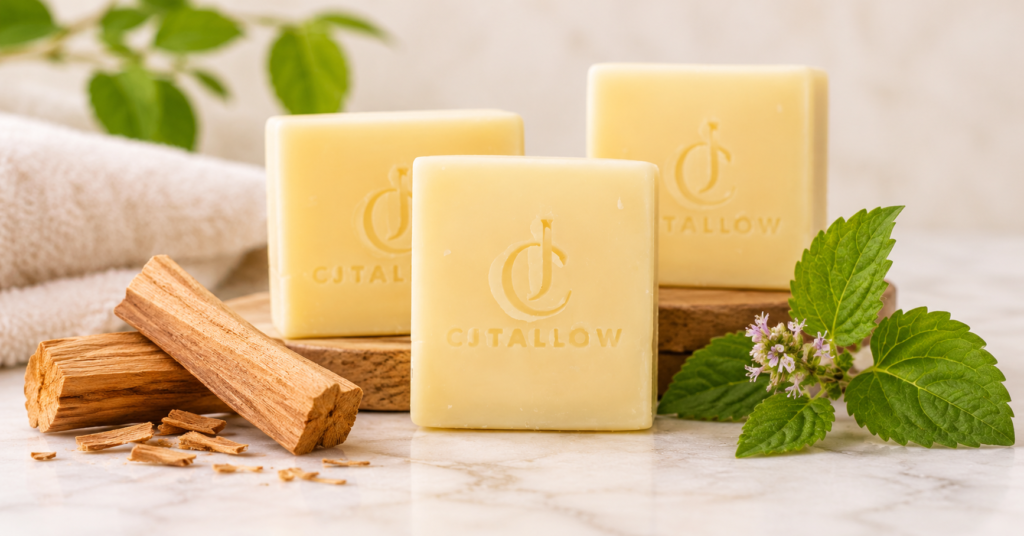
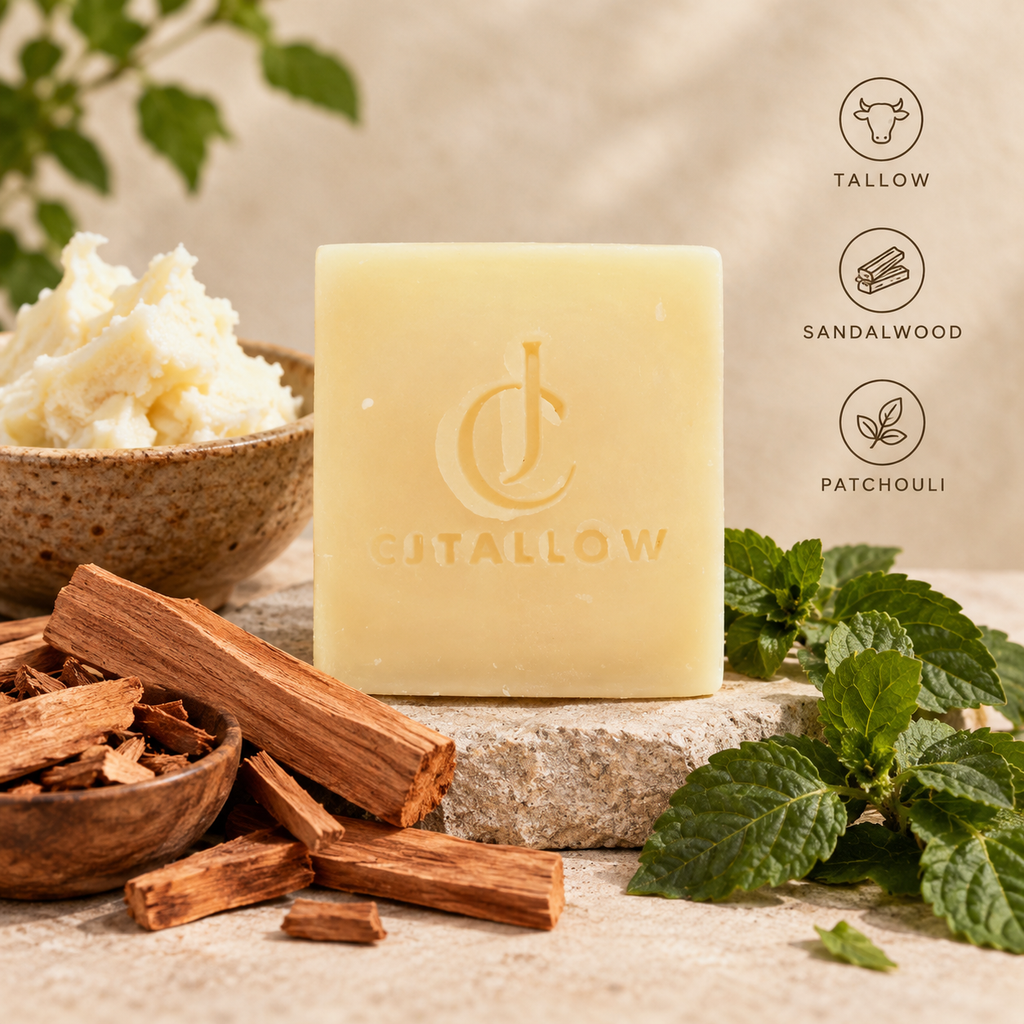
At CJTallow, we bring this much-loved fragrance into our handmade Sandalwood & Patchouli Soap. Made in small batches in the UK using British grass-fed tallow and scented with sandalwood and patchouli essential oils, it combines traditional cold-process soapmaking with a rich, earthy fragrance.
If you enjoy natural soap, traditional British craftsmanship and warm botanical scents, explore the CJTallow handmade soap collection and discover a different way to enjoy everyday bathing.