
Understanding Patchouli: Earthy Botanical Ingredient
Some botanical ingredients are recognised not only for their origins but also for their distinctive fragrances. Patchouli is one such ingredient. Known for its rich, earthy and slightly musky aroma, it has been used in traditional perfumery and personal care for generations. Its deep, grounding fragrance makes it a popular choice in soaps, body care products and natural essential oil blends.
Today, patchouli remains a favourite among those who appreciate warm, woody and botanical scents. Whether used on its own or combined with other essential oils, it brings depth and character to everyday personal care products.
At CJTallow, we appreciate the role that carefully selected ingredients and traditional methods play in creating handmade skincare. Let’s take a closer look at patchouli, its history and why this distinctive botanical ingredient continues to be used in soaps and personal care.
What is Patchouli and where does it originate?
Patchouli is an aromatic plant belonging to the mint family, Lamiaceae. Its botanical name is Pogostemon cablin, and it is native to tropical regions of Southeast Asia.
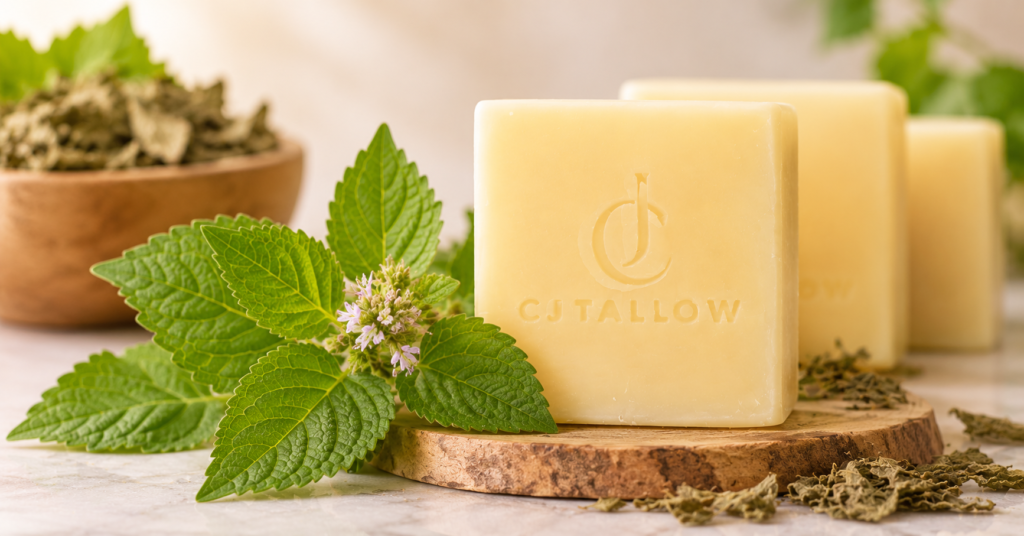
The plant has soft, green leaves that are harvested and dried before being processed to obtain patchouli essential oil. The oil is generally extracted through steam distillation of the dried leaves.
Although patchouli originated in Southeast Asia, it is now cultivated in several tropical regions, including Indonesia, India, Malaysia and other parts of the world.
Indonesia is particularly well known for patchouli production and remains an important source of the essential oil used in perfumery and personal care.
Unlike essential oils obtained from flowers or citrus peels, patchouli oil comes from the leaves of the plant. This gives it a distinctive fragrance that is quite different from lighter floral or fresh botanical scents.
The History of Patchouli in Fragrance and Personal Care
Patchouli has a long history in traditional fragrance and personal care practices, particularly across parts of Asia.
Its aromatic leaves were historically used to scent fabrics, clothing and personal belongings. Patchouli’s strong fragrance also made it useful for protecting stored textiles from insects.
As international trade expanded, patchouli became increasingly familiar in Europe during the 18th and 19th centuries. Its scent became associated with imported textiles and luxury goods, helping introduce the fragrance to a wider audience.
Over time, patchouli essential oil gained popularity in European perfumery. Its deep aroma became a recognisable ingredient in many fragrance compositions, particularly those featuring woody, earthy and oriental-inspired notes.
During the 1960s and 1970s, patchouli became particularly associated with popular fragrance culture, further establishing its place as a distinctive scent.
Today, it continues to feature in perfumes, soaps, body washes, lotions and other personal care products. Its long-standing popularity reflects the appeal of its unusual and easily recognisable aroma.
Understanding Patchouli’s Rich, Earthy and Distinctive Aroma
Patchouli is not a particularly light or delicate fragrance. It has a rich, deep character that makes it stand out from many other botanical essential oils.
Its aroma is commonly described as earthy, woody, musky and slightly sweet. Some people also notice a subtle herbal quality, giving the fragrance additional depth.
A few characteristics help explain its appeal:
- Earthy notes: A deep, natural aroma reminiscent of damp soil and woodland.
- Woody qualities: A warm fragrance that adds depth to essential oil blends.
- Musky undertones: A rich, lasting character that makes patchouli distinctive.
- Subtle sweetness: A gentle sweetness that balances its deeper earthy notes.
Patchouli is often used as a base note in perfumery. This means it helps provide depth and structure to a fragrance, complementing lighter notes from other essential oils.
For those who enjoy natural, earthy scents rather than sweet or strongly floral fragrances, patchouli offers an interesting alternative.
Why is Patchouli Essential Oil Used in Soaps and Skincare?
Patchouli essential oil is widely used in personal care products because of its distinctive fragrance and versatility.
In handmade soap, it adds a deep, earthy aroma that works particularly well with traditional formulations. It can be used on its own or blended with floral, citrus and woody essential oils to create different fragrance combinations.
It is also found in body washes, creams, lotions and other fragranced skincare products.
While patchouli is sometimes discussed in traditional skincare practices for its potential cosmetic properties, it is important not to confuse traditional uses with proven skincare benefits. Its inclusion in a cosmetic formulation does not mean that it will treat or prevent skin conditions.
For soapmakers, one of its main attractions is its ability to complement other botanical fragrances. A relatively small amount can contribute a distinctive character to a fragrance blend.
When properly formulated and used at appropriate cosmetic concentrations, patchouli essential oil can be a lovely addition to handmade soaps and personal care products.
Patchouli as Part of a Simple Bathing Ritual
Everyday bathing does not need to be complicated. Sometimes, choosing a fragrance you enjoy and taking a few extra moments for yourself can make an ordinary routine feel more enjoyable.
A handmade patchouli soap offers a simple way to introduce this earthy botanical fragrance into your daily bathing routine.
Its rich aroma makes it particularly appealing for an evening shower or bath, especially if you prefer deeper, warmer scents over fresh citrus or sweet floral fragrances.
You can keep the rest of your routine uncomplicated by following your usual cleansing and moisturising steps. Pair your soap with a suitable body balm or moisturiser after bathing for a straightforward approach to personal care.
At CJTallow, we believe everyday skincare can be both practical and enjoyable. Our handmade soaps are made in small batches in the UK using traditional cold-process methods and carefully selected ingredients.
Pairing Patchouli with Sandalwood for a Warm, Balanced Fragrance
One of the most appealing ways to enjoy patchouli is by combining it with sandalwood.
Both essential oils have naturally woody characteristics, but they bring different qualities to a fragrance blend.
Sandalwood is known for its smooth, creamy and warm woody aroma. Patchouli, meanwhile, has a deeper, earthier and slightly musky character.
Together, they create a balanced fragrance that feels rich without being overly sweet or floral.
This combination is particularly appealing in handmade soaps because the two scents complement one another naturally. Sandalwood softens the deeper earthy notes of patchouli, while patchouli adds depth to sandalwood’s smoother fragrance.
The result is a warm, understated scent for anyone who enjoys traditional woody and botanical fragrances.
Discover Patchouli with CJTallow
Patchouli has remained a popular botanical ingredient in fragrance and personal care for generations. From its origins in Southeast Asia to its place in modern perfumery and handmade skincare, its earthy aroma continues to attract those who appreciate distinctive natural scents.
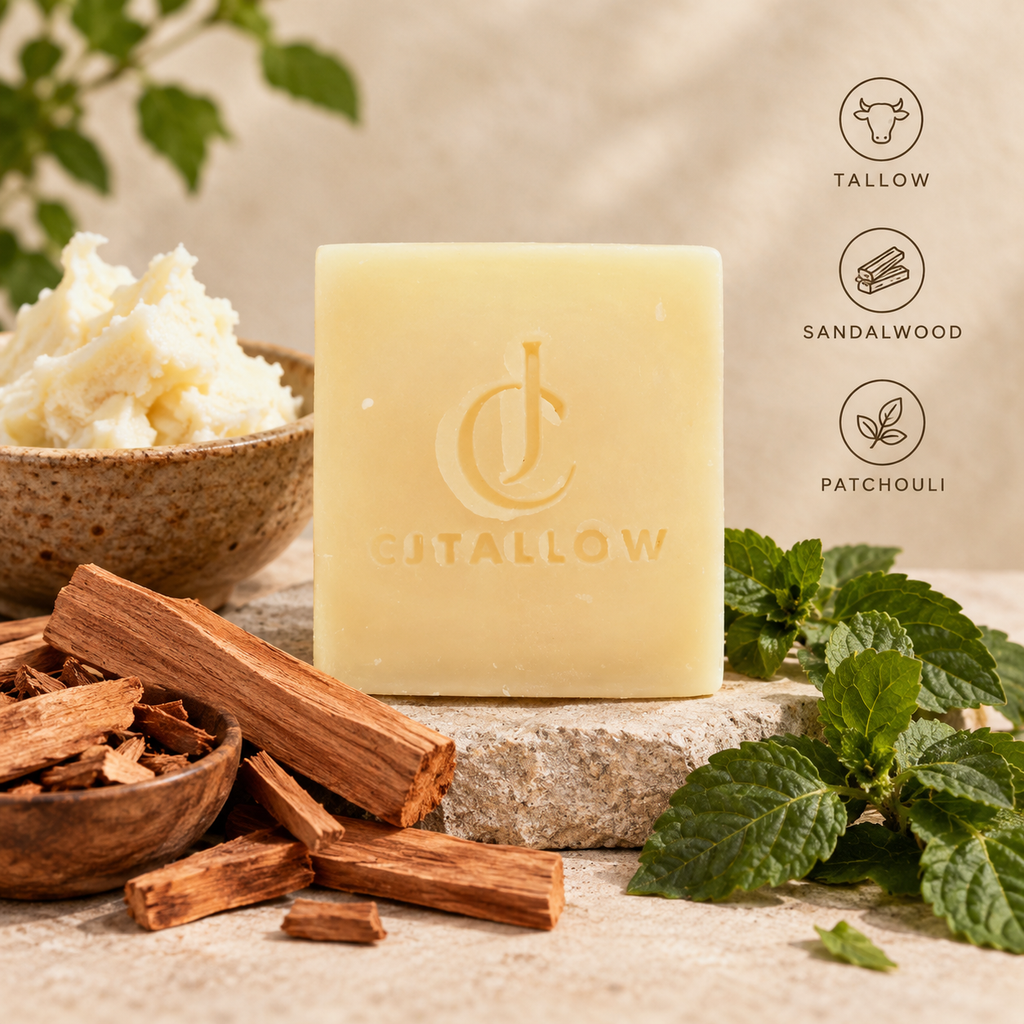
At CJTallow, we bring these two complementary fragrances together in our Handmade Sandalwood & Patchouli Soap.
Made in small batches in the UK using British grass-fed tallow and traditional cold-process soapmaking methods, it combines carefully selected ingredients with the warm, woody notes of sandalwood and the rich, earthy character of patchouli.
If you enjoy traditional handmade soap and botanical fragrances, explore the CJTallow soap collection and find a scent to make everyday bathing a little more enjoyable.